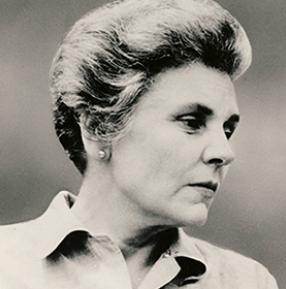
"I am 3/4ths Canadian, and one 4th New Englander - I had ancestors on both sides in the Revolutionary war." - Elizabeth Bishop
____________________________________________

Wednesday, April 8, 2015

Our Needham, Massachusetts Correspondent Writes:


North Hill Senior Community Presents “The Poetry of Elizabeth Bishop”

Thursday, April 9, 2015

WHAT: “The Poetry of Elizabeth Bishop,” a discussion with North Hill senior community resident Patricia Feddersen and Smith College Professor of English Language and Literature Michael Thurston. Analyze some of the poet’s most familiar and best loved poems with an eye to the poet’s eye in order to understand how Bishop presents the world.
The discussion precedes the opening reception of a new North Hill Art Gallery exhibit, “To See the Sun the Other Way Around,” featuring the oil paintings of artist Nan Hass Feldman.
The complimentary event is part of the True North Spring 2015 Courses and Events and is open to all Boston Metrowest seniors.
WHEN: Thursday, April 9, 2015 from 2:30 p.m. to 4:00 p.m.
WHERE: North Hill senior community, 865 Central Avenue, Needham, MA 02492
COST: Free
RSVP: Seating is limited and RSVP’s are required: Email RSVP@NorthHill.org or call 781-433-6400

Poetry of Elizabeth Bishop

Mark Hamilton paints during the Elizabeth Bishop Festival

Mark Hamilton began exhibiting visual art in 1985 with the Surrealist group “An Episode of Sparrows,” and has since shown in a range of visual media at NSCAD, Dalhousie University, private galleries, and extensively through online “virtual” galleries. You can find him at https://www.facebook.com/markhamiltonart
 
Mark and his good friend John Barnstead (our esteemed collaborator on this blog and another festival artist) in the kitchen of the Elizabeth Bishop House. [Ed. Note: They are delightful goofs, 
AND two of the smartest guys you will ever meet.]
Mark studied drawing and sculpture at NSCAD and has been painting for 30 years. His work is represented in collections in Canada, the United States, Russia and New Zealand. He currently manages an open studio (The Art Barn) at Brookfield, N.S., where he lives with his wife and two daughters. His favourite poem is “The Moose.”
 One of Mark's amazing abstracts
Mark will be painting en plein air during the festival. He will join musician Joanne Hatfield, his partner in life and creativity.

Monday, April 6, 2015

Suzie LeBlanc sings her Elizabeth Bishop songs in Victoria

An alert for all our west coast friends in Victoria, B.C. Suzie LeBlanc will be singing some of her Elizabeth Bishop songs (settings of poems she commissioned in 2011 for the Bishop centenary) with the Victoria Symphony Orchestra. Here are the particulars:
A Celebration of Poetry: I am in need of music
Victoria Symphony Orchestra
18 April 2015
For more information see:
The Bishop songs she will singing:
Silken Water: The Elizabeth Bishop Suite by Alasdair MacLean

Four Songs on Poems by Elizabeth Bishop by Christos Hatzis

These and several other settings (by John Plant and Emily Doolittle) were recorded as “I am in need of music,” launched by Centre Discs (http://www.musiccentre.ca/node/77772 ) in 2013 and winner of an East Coast Music Award in 2014.
Here Suzie performs with Symphony Nova Scotia in Halifax, N.S.,
on 29 March 2015
For our east coast friends in Nova Scotia, Suzie will be back in Halifax on 24 May 2015 to perform in a fund-raising concert for St. George’s Church (the Round Church). We will provide more details early in May.

Saturday, April 4, 2015

Painting the World: Conversations with Visual Artists at the Elizabeth Bishop Festival

One of the afternoon events at the Elizabeth Bishop Festival in Great Village, N.S., on 8 August 2015, will be a conversation with four exceptional visual artists: Emma FitzGerald, Carol Laing, Joy Laking and Linda Rae Dornan. This conversation will be moderated by writer and Mount Allison Fine Arts professor Anne Koval. This post profiles Carol Laing, or more particularly, it presents Carol’s artist statement about a fascinating Bishop project that will be on exhibit during the festival in the Elizabeth Bishop House.
******************************************************************
Carol in front of her Bishop "ghost drawings"

The Ghost Drawings: Haunting Elizabeth Bishop
18 drawings, graphite on mylar by Carol Laing

At its simplest the series of 18 graphite drawings I call “The Ghost Drawings: Haunting Elizabeth Bishop” is an extended series of ‘Conversation Pieces’ in the art historical sense: small informal scenes with people set indoors or outdoors. Here the scenes — and the people in them — all derive from photographs taken across the arc of Bishop’s life, from babyhood to death. Bishop is a constant, and changing, presence. The people and the locations also change. And because the sources of the drawings are photographs there is a balance between presence and absence: it is as if ‘everything’ becomes level as she — in the drawings — comes back to us. She is an elusive subject ‘caught’ by the camera. The elusive subject who balanced — in her last completed poem Sonnet — being “Caught” and being “Freed.”

The content of the drawings moves from photographic positive to negative formats, and back. There is a play between ‘normal’ and ‘inverted’ values, the darks reversing into lights, and the lights into darks. Their sequencing sometimes telescopes, and sometimes elides time, and time passing. We are in the realm of what John Keats called “negative capability” where what is true is a balance between the factual and “uncertainties, mysteries, doubts.” We are also in the realm of an “unconfined consciousness” that keeps things fluid, and moving. The drawings show an affinity for water and remind us that Elizabeth Bishop was born with the ocean at her door. A restlessness is visible too — and a tension between the desire to travel and a fierce desire to have a home…

I borrowed the word “haunting” from Virginia Woolf’s marvelous 1930 essay “Street Haunting: A London Adventure.” In the essay Woolf walks out into the London streets one evening in winter. Her pretext is to buy “a lead pencil” but the appetite is for life and the world. In the end she finds, and buys, her pencil. I like to think I’ve used one of that pencil’s myriad successors to make “The Ghost Drawings: Haunting Elizabeth  Bishop.” And I remain delighted — and grateful — that I was able to begin these  drawings during an artist’s residency in Elizabeth Bishop’s grandmother’s house.

Thursday, April 2, 2015

Lifting Yesterday – Supplement – Chapter 5: In search of a shipwreck

I have often been asked, in one way or another, whether being so immersed in one subject for so long (i.e., Elizabeth Bishop for over 20 years) is limiting. I can appreciate why someone might think this to be the case, but the truth is quite the opposite. If you are engaged in a deep study of just about anything, you find yourself travelling (metaphorically and literally) to all sorts of places you never expected.

I am particularly fortunate that my subject (one of them, that is) — Elizabeth Bishop — happens to possess an astonishing range, a remarkable latitude of context. Not only was her art diverse and her life complex and fascinating, her own interests were abundant. So, my immersion in the study of Elizabeth Bishop’s life and art has taken me on voyages that I would never have imagined (including, for example, an actual journey to Brazil, and the discovery of the poetry of Gerard Manley Hopkins).

My interest in the history of my own province long predated my encounter with Elizabeth Bishop (I have two degrees in history and worked for over five years in the Nova Scotia Archives). But when I embarked on a study of Bishop’s connections to Nova Scotia and the Maritimes, in many ways I immersed even more deeply in the history of this region. It was as if I acquired a third history degree.

Chapter Five of Lifting Yesterday is the first of three chapters (Five, Six and Seven) which comprise a mini-biography of Bishop. The first four chapters explored powerful Nova Scotia influences on Bishop (place, ancestors/family and her mother). The next three chapters look at how those influences manifested in her life. The way I decided to chart the impact of these influences was through a more conventional chronological narrative. Thus, what Chapters Five through Seven offer is a biography within a biography. Leave it to me to complicate structure, but Lifting Yesterday’s form seemed simply to emerge out of my immersion.

I have always contended that Bishop’s childhood held many keys and clues to “Bishop the adult” and “Bishop the poet.” So, Chapter Five is a direct account of what I see as significant in the earliest years of her life. I focus on only a few themes, as I provide a basic narrative of these years. One thing from these earliest years I’m quite proud of is my discovery that Bishop, fascinated by shipwrecks her whole life, experienced her own shipwreck in 1919.

The discovery happened this way: I spent months in the Nova Scotia Archives reading the “Newsy Notes” of Great Village in the Truro Daily News (a motherlode of information). One day I came across a note that said (I’m paraphrasing): “Miss Grace Boomer and her friend [name forgotten by me] and little Miss Elizabeth Bishop returned home for the summer. They were aboard the ill-fated North Star.” Thought I: “Ill-fated North Star! What is that?!”
North Star (Yarmouth County Museum)
One small reference sent me off on a delightful journey — first through more records in the archives, where I discovered that the steamer North Star went aground off the coast of Nova Scotia on a trip from Boston to Yarmouth. That Bishop never directly mentions this event (she was eight years old at the time) in anything I have ever read was disappointing to me, but I still felt that this experience was vital. How could being on a shipwreck not affect you?
 North Star aground on Green Island (Yarmouth County Museum)
After I’d mined the archives for information, I learned that the Yarmouth County Museum and Archives (http://yarmouthcountymuseum.ca/) had more information. So, one day, my father and I drove to Yarmouth to visit the museum. The archivist, whose name also escapes me, showed me a number of North Star artefacts. The most impressive of them, I felt sure, would have thrilled Bishop: the great ship’s bell (which I got to ring!) and its wheel.
The wheel of the North Star (my own photo)
As we talked, the archivist said that sometime in the 1970s an elderly woman, who had been a child on the North Star on that fateful day, came to the museum seeking information about the shipwreck. She was sure that the archivist at the time had alerted the local paper and there was a photo of this woman. You can imagine what I thought. I knew Bishop had passed through Yarmouth in the mid-1970s when she and Alice Methfessel had taken the ferry Prince of Fundy to and from Portland/Yarmouth and drove to Great Village. Might Bishop have gone to the museum? The archivist went off to find the photograph, returning about fifteen minutes later with it. Alas, it was not Bishop; but as I looked at the photo, it was amazing to think that this woman had shared that experience with Bishop.
Survivor of the North Star with Yarmouth County Museum archivist
Chapter Five of Lifting Yesterday has a detailed account of what happened on the North Star on that “ill-fated” day.

I incorporated the North Star experience into an essay I wrote that was published in The Dalhousie Review, “Shipwrecks of the Soul.” I’d be happy to send you a pdf of that essay, if you are interested.
Yarmouth County Museum Facebook page


Sunday, March 29, 2015

Musician Joanne Hatfield at the Elizabeth Bishop Festival

Imagine sitting under the shade of a big maple listening to the lively melodies of a guitar, songs of Brazil in the north. The EBSNS is delighted to have accomplished Bossa Nova musician Joanne Hatfield performing during lunch during the Elizabeth Bishop Festival on 8 August 2015.
Truro, N.S., native Joanne Hatfield holds a music composition degree from Dalhousie University and has taught music for more than 20 years. She currently teaches piano and ukulele and directs a choir in Brookfield, Nova Scotia. Her composition and guitar/vocal performance of Brazilian Bossa Nova repertoire has led to collaborations with jazz guitarist Amy Brandon, and with poet/vocalist John Barnstead.
Cocada performs "Black Beans and Diamonds"
in St. James United Church, 2009
Her trio Cocada, with Dawn Hatfield on flute and tenor saxophone, and Jef Wirchenko, double bass, teamed up with Barnstead for “Black Beans and Diamonds,” a presentation of Brazilian music and Elizabeth Bishop’s prose and poetry associated with her time in Brazil.
Left to right: Sandra Barry, John Barnstead, Joanne Hatfield,
Dawn Hatfield, Jef Wirchenko, Great Village, 2009
Cocada has performed at a variety of venues, from multi-cultural festivals to intimate settings. The group has recently enjoyed working with percussionist Glenn Fraser who adds new textures and rhythms to the ensemble. “Lantern,” Joanne’s Bishop-inspired composition for baritone sax, piano and voice, premiered in Halifax in July 2012.

Thursday, March 26, 2015

Poetry Reading at the Elizabeth Bishop Festival – Profile of Libby Schofield

One of the exciting events that will take place at the Elizabeth Bishop Festival on 8 August 2015 will be a morning poetry reading with Joanne Light, Chad Norman, Andrew Daniel Patterson and Libby Schofield. This post is a profile of Libby Schofield. 

*******************************************************************


Libby Schofield is a blogger and author from a small community in mainland Nova Scotia. She currently resides in Halifax where she studies at the University of King’s College. She has been writing poems and short stories for as long as she can remember, and is usually working on one novel idea or another. Her work has appeared online, in magazines, in three Canadian anthologies, and she wrote the narration and synopsis for a local rendition of The Nutcracker.

Her anthology The Night is Starry: A Collection of Poems and Short Stories was released August 14, 2013. Her short story “The Carpenter” was released as an ebook in June 2014.


She has a passion for gender portrayal in media, including books, and hopes to incorporate healthy ideas about gender and body image into her own writing. Not every woman needs a prince to have a happily ever after, and there are more things than physical beauty and heteronormative romance to make a good story. Seeing different types of women and men who may or may not conform to gender roles is important in creating a positive idea of gender, and having diverse character portrayals spanning gender, sex, race, class, and age.

Libby is deeply in love with Nova Scotia and her rural community. The Elizabeth Bishop festival in 2011 prompted her to write about her hometown for the first time, and she has since made Nova Scotia and home a theme in many aspects of her writing. After moving to Halifax for university, she has been struck by the difference between country and city life. She enjoys telling any city person who will listen about what it’s like making maple syrup, having cows in front of your high school, and living in a place with no stop lights.

Her interests include classic and nerdy novels, gender studies, teen writers and artists, cats, history, and the mass consumption of chocolate and tea. She shares her opinions on everything from feminism to university life on her blog (https://libbyschofield.wordpress.com/) and is always looking for new people to connect with.

Monday, March 23, 2015

A Gathering Place for Artisans and Artists: The Elizabeth Bishop Festival Market

One of the main features of the Elizabeth Bishop Festival taking place in GV on 8 August 2015 is the “Festival Market,” where over a dozen artists and artisans will gather to share their creations. We will be profiling these artists and artisans over the next few months. This post is a profile of painter Andrew Meredith.
********************************************************************


Andrew’s passion for art came early in life, surrounded by the colours and beauty of Nova Scotia’s Bay of Fundy, where Andrew was born. Andrew has had his art in galleries across Canada. In 2003 his artwork was featured at the Canadian Museum of Civilization in Ottawa. In 2011 Andrew created several images of the Elizabeth Bishop House. Part of the proceeds of the sale of prints of these paintings went to support the house
.
Andrew's charming painting of the Elizabeth Bishop House for his 2011 fund-raiser.

To view more of Andrew’s artwork check, go to his website
.

Saturday, March 21, 2015

Poetry Reading at EB Festival – Profile of Joanne Light

One of the exciting events that will take place at the Elizabeth Bishop Festival on 8 August 2015 will be a morning poetry reading with Joanne Light, Chad Norman, Andrew Daniel Patterson and Libby Schofield. This profile is of writer Joanne Light
*********************************************************
Joanne Light is a Nova Scotian writer, most recently of “In and Out of the Box/Stories of Teaching and Travelling”; Suzie, an Orphan Orangutan/A Very Sad and a Little Bit Happy Story; and Nomos: Shaping the Land/Physis: that Shapes Us. She has attended The Banff Centre literary arts program in the Advanced Writing Seminar and the Wired Writing Studio (in 2008 and 2010). She has published in Newfoundland Quarterly, Arc Poetry Magazine, Grain, Pierian Spring, Pottersfield Portfolio among others, and has performed in Saint John, Fredericton, northern Saskatchewan, Toronto at The Art Bar, Montreal at Idle No More Poetry, and in Halifax at the Lilah Kemp Reading Series.Joanne was a regular artist in residence at Elizabeth Bishop House Artist Retreat.

After Judy McFarlane heard Joanne read, she wrote: “Recently, I attended the Wired Writing program at the Banff Centre. Every few days, we had a reading night. We heard many wonderful pieces, but for me, one of the real highlights was hearing Joanne Light read/perform her poems. From the moment she announced the title, her  poems grabbed my attention, held it throughout, made me laugh, cry, moved me more than I thought possible. Her work is insightful, honest, funny, and, in my opinion, brilliant.”

Wednesday, March 18, 2015

Poetry reading at EB Festival: Profile of Andrew Daniel Patterson

One of the exciting events that will take place at the Elizabeth Bishop Festival on 8 August 2015 will be a morning poetry reading with Joanne Light, Chad Norman, Andrew Daniel Patterson and Libby Schofield. This post is a profile of Andrew Daniel Patterson.
*********************************************************

Andrew Patterson (http://andrewdanielpatterson.com/artistCV) is a writer/reader/listener living in Halifax, N.S. His poetry has been featured locally in The Periodical Project and The Impressment Gang, as well as abroad in Chicago’s The Hypocrite Reader. His most recent projects include a three-week residency at The School Of Making Thinking in East Branch, New York, and a public engagement audio piece as part of Secret Theatre’s Secret Residency in Halifax. Currently, Andrew is focusing on visual poetry, learning the art of letterpress at NSCAD’s Dawson Print Shop and developing a piece commissioned for a public sculpture to be mounted in early 2015.


Saturday, March 14, 2015

“Writing the World” – Conversations with writers at the Elizabeth Bishop Festival

One of the afternoon events at the Elizabeth Bishop Festival in Great Village, N.S., on 8 August 2015, is a conversation with four exceptional writers: John Barnstead, Binnie Brennan, Carole Langille and Harry Thurston. This conversation will be moderated by yours truly.

We will be profiling all these writers as the winter and spring progresses. This post features writer and sculptor Carole Langille.

*****************************************************************
Carole Glasser Langille is the author of four books of poetry, a collection of short stories and two children’s books and has been nominated for The Governor General’s Award in poetry, the Atlantic Poetry Prize, long-listed for the ReLit award in fiction, and has received “Our Choice Award” from the Canadian Children’s Book Centre. In 2013 she was awarded The Established Artist Recognition Award. Carole has given readings and workshops in South Africa, India, Kauai and Paris. She teaches creative writing at Dalhousie University, Halifax, N.S. [Ed. Note: I have just learned from Carole that her collection of linked short stories I am what I am because you are what you are has been accepted by award-winning Nova Scotia publisher Gaspereau Press. It will appear in the fall of 2015.]
 
Carole in front of Shakespeare and Co., Paris
Carole is also a sculptor who makes use of one of the most expressive natural mediums in Nova Scotia: driftwood. Her whimsical driftwood people will be exhibited at the Craig Gallery (http://www.alderneylanding.com/gallery/), Dartmouth, N.S., from 24 June to 5 July 2015. The opening takes place Wednesday, 24 June, at 7 p.m. She will bring some of this cast of characters to the Elizabeth Bishop Festival.


Wednesday, March 11, 2015

A Poetry Reading at the Elizabeth Bishop Festival

One of the many exciting events that will take place at the Elizabeth Bishop Festival on 8 August 2015 will be a morning poetry reading with Joanne Light, Chad Norman, Andrew Patterson and Libby Schofield. We will be profiling each of these artists in the next weeks. This post is a profile of Chad Norman.

***********************************************************

Chad Norman resides in Truro, N.S. His poems have appeared in literary publications around the world. His collection, Masstown, which celebrates the once-thriving family-owned dairy farm industry of that area, came out in 2013 from Black Moss Press (http://blackmosspress.com/chad-norman/). A new collection, Book of Awe, poems which capture the state of awe through a return to gardening, is due out Fall 2015, again from Black Moss Press.
Chad has published fifteen books of poetry in a career that spans twenty-five years. He has won the B.C. Writers’ Poetry Contest, as well as the Gwendolyn MacEwen Memorial Award.


Monday, March 9, 2015

Our Amsterdam Correspondent writes --

Poetry and madness

Book Week Meeting in collaboration with the Illustrious School

A Reading
 
Madness is the theme of Book Week 2015. Because poetry and madness are an excellent combination, join us in an analysis and audience discussion of four works, on March 12, 2015, 1:00 - 3:00 p.m., at SPUI 25 (Spui 25-27 1012 XM Amsterdam T: +31 (0) 20 525 8142):

[1]  Dr. Gaston Franssen, lecturer in Literary culture
 
- At Rika by Piet Paaltjens, the alter ego of the Leiden student and pastor Haverschmidt François (1835-1894)

[2]  Dr. Henk van der Liet, Professor of Scandinavian language and culture
 
- Bor Her (Living here) by the Danish rapper Raske Penge

[3]  Dr. Hanneke Rumped, Assistant Professor of Literature
 
- One Art by Elizabeth Bishop

[4]  Dr. Irene Zwiep, Professor of Hebrew, Aramaic and Syriac languages ​​and cultures)
 
- Madness in love by Moses ibn Ezra (Granada, 1055/60-Castile, 1138)

Access to the activities of SPUI25 is free, but registration is required: spui25@uva.nl | T: 020 525 8142.

Our Athens Correspondent Writes --


An event dedicated to the important American poet, Elizabeth Bishop…

Event dedicated to Elizabeth Bishop at the Hellenic American Union 
Elizabeth Bishop (1911-1979) worked in both traditional poetic forms and brilliantly arranged free verse. Her poetic work consists of five books: North and South (1946), A Cold Spring (1956), Questions of Travel (1965), The Complete Poems (1969) and Geography III (1976). Among her other distinctions, she was awarded the Pulitzer Prize for poetry in 1956 and the National Book Award in 1970.

This evening of poetry brings together eleven poets to read poems by Bishop in both the original and new translations especially made for this event: Orfeas Apergis, Antonia Gounaropoulou-Touriki, Yiannis Doukas, Lenia Safiropoulou, Katerina Iliopoulou, Panayotis Ioannidis, Lena Kallergi, Adrianne Kalfopoulou, Stergios Mitas, Artemis Michailidou, Konstantinos Plisiotis and Theodoros Chiotis. Patricia Kolaiti will present the poet’s life and work.

Information

ArtistElizabeth Bishop
OrganizerHellenic American Union, Words (can) do it
VenueHellenic American Union Theater
Start Date17/03/2015
End Date17/03/2015
Starting Time19:30
TypeTalk - Presentation
ParticipantsOrfeas Apergis, Antonia Gounaropoulou-Touriki, Yiannis Doukas, Lenia Safiropoulou, Katerina Iliopoulou, Panayotis Ioannidis, Lena Kallergi, Adrianne Kalfopoulou, Stergios Mitas, Artemis Michailidou, Konstantinos Plisiotis, Theodoros Chiotis, Patricia Kolaiti
Languages: Greek and English
Interpretation Provided: No
Registration Required: No
Reservation Required: No
Admission FeeAdmission is free 

For further information, here are the coordinates of the organizers:

 Division of Cultural Affairs
Massalias 22,
10680 Athens
Tel.: 2103680052, 2103680047, 2103680071, 2103680973
Fax: 2103633174
Email: culture@hau.gr

Friday, March 6, 2015

Face Painting with Susan Kerslake at the Elizabeth Bishop Festival

Without a doubt, one of the most popular activities for children at any gathering is face painting. We are thrilled to have one of the most popular face painters in Nova Scotia as part of the Elizabeth Bishop Festival, on 8 August 2015, in Great Village, N.S.: Susan Kerslake.
(Photo by Binnie Brennan)
Here is the bio blurb Susan has given me to use in this profile: “Susan Kerslake has been face painting forever, starting at the IWK Hospital with poster paint and Nivea cream. Times have changed but face painting has not lost its allure.”
(Susan Kerslake in action at the “Celebration of Creativity Day”
at the Great Village School in 2013. Photo by Laurie Gunn)
But I must add, Susan has been a member of the Elizabeth Bishop Society of Nova Scotia for many years. She has also been one of the most faithful supporters of the Elizabeth Bishop House, especially volunteering at the Help Heat Her Home fund-raisers. In another life (and still in this one, too), Susan is a wonderful writer. We are delighted that she will bring her artistic skills to the festival.

Tuesday, March 3, 2015

"Painting the World" – Conversations with Visual Artists at The Elizabeth Bishop Festival

One of the afternoon events at the Elizabeth Bishop Festival in Great Village, N.S., on 8 August 2015, will be a conversation with four exceptional visual artists: Emma FitzGerald, Carol Laing, Joy Laking and Linda Rae Dornan. This conversation will be moderated by writer and Mount Allison Fine Arts professor Anne Koval. We will profile all of these artists over the next weeks. This post profiles Halifax artist Emma FitzGerald.
**********
(photo by Scott Munn)
Emma FitzGerald (www.emmafitzgerald.ca) was born in Lesotho, a small mountainous country surrounded by South Africa, to Irish parents, and grew up in Vancouver, B.C. Trained as both an artist and architect she now works as a freelance illustrator and artist in Halifax, N.S.

Her interest in Elizabeth Bishop began when she participated as an artist at White Rabbit (http://whiterabbitarts.ca/), an installation art festival, in nearby Upper Economy, N.S., in August 2013. She biked with her studio chair, a Bass River stool attached to her bike,
(photo by Marcello Roach)
and sat on it as she drew the town of Bass River. This interest was furthered when she stayed in the Elizabeth Bishop House in October 2013, and upon travelling to Brazil in September 2014. She values the connection that Bishop always makes to ‘home’, and the many places home can be found. Emma currently celebrates the notion of ‘home’ in her custom house portraits (https://www.facebook.com/houseportrait).
(Antique shop in Great Village, N.S.)
Emma has been working on a book on neighbourhoods of Halifax for a year and a half, comprised of drawings she did on location in communities from Grand Desert all the way to St. Margaret’s Bay, with anecdotal text. It will be published by Formac Lorimer in the fall of 2015. Before the launch of this book, Emma returns to Brazil for an artist residency in Rio at Largo das Artes (http://largodasarteseng.tumblr.com/).

Sunday, March 1, 2015

Lifting Yesterday – Supplement – Chapter 4: Gretrude May Bulmer Bishop

Over the years that I have been researching and writing about Elizabeth Bishop, the one aspect of her life which has most interested me is her relationship with her mother. Because their actual time together was of relatively short duration (the first five years of Bishop’s life), most critics and scholars assume that there was no ongoing relationship at all — which makes me wonder what sort of relationships these critics and scholars have with their own mothers. I am no psychologist, so cannot presume to know much if anything about the organic nature of this relationship (heavens, I’m still working out my own relationship with my mother, who has been dead over eighteen years); but on the most basic, practical level, regardless of the length of time we have with our mothers, the relationship not only endures, but continues to affect our sense of self and our position vis-à-vis the world. Sometimes I’ve wondered if scholars think that Bishop emerged fully formed from the head of some Vassar deity in 1934, without any connection to what was, upon investigation, a complex, fraught, fascinating childhood.

One of the critical habits about this important relationship of Bishop’s life that has been perpetuated in most of the scholarship is the often complete erasure of Bishop’s mother, Gertrude May Bulmer Bishop. Many times, Gertrude is referred to only as “mother,” as if she was some sort of vague notion, not a flesh-and-blood human being. Bishop certainly did not experience her mother as a vague notion, even in the long, living absence that occurred because of her mother’s hospitalization. Much of this erasure of Gertrude is due to the alleged “objectivity” of academic literary criticism and critics and their belief that the life must remain removed from the art — to link art to the life of the artist is a disservice to (even a betrayal of) the art. Bishop did not separate art from life, nor did she privilege art over life. Just as with her understanding of the forces of creativity, Bishop believed there was no “split,” which makes life and art quite messy, “an untidy activity” — even if one can hold to some enduring truths outside our selves, such as beauty. Of course, there were times when Bishop believed the opposite of all of this — to hold too rigidly to one belief paints one into a very small corner.

A major part of my Bishop research has been to locate information about Gertrude, to piece together a more detailed picture of this quite real and complex person. Bishop famously “disembodied” her mother in a sound, “the scream” of “In the Village” — but look carefully at that masterpiece and her mother is quite embodied through all the senses and in many dimensions. Bishop even tries to understand her mother’s state of mind, unsuccessfully perhaps because she was only five when she witnessed the events of that story.
This portrait of Gertrude Bulmer, around age 7 (circa 1886) was done by an "unknown itinerant portrait painter." It and its companion portrait of Arthur Bulmer were given to Bishop by her aunts in the 1960s. They formed the basis of "Memories of Uncle Neddy." The portraits still exist in the US and in 2010-2011 I tried desperately to find a way to buy and repatriate them, but failed.

For me, Chapter Four of Lifting Yesterday is the most important chapter in the book, providing the beginning of a corrective of the general treatment of Gertrude Bulmer Bishop in Bishop scholarship. This portrait is only a sketch, more detailed than anywhere else, but still only a sketch. Even so, I hope that I bring a living, breathing Gertrude more the fore, placing her in the context of her family, community and time; but even more, showing something of her “selfhood” — the sense of who she was and why she was unable to hold onto what we would, rightly or wrongly, call a “normal life.”

Bishop was deeply affected by her parents’ lives, by the premature death of her father, by the ongoing mental struggle of her mother. I think Bishop spent her entire life dealing with all this stuff: she sunk under its burden; she rose above its pain; she channelled her confusion, anger, frustration and sorrow into her art, transforming the overwhelming emotions into amazing poems and memoirs. She didn’t let it get to her and she let it trap her, all at the same time. Whose life is any different, I wonder? Bishop’s fable “In Prison” declares that we are all in some sort of prison, so the trick is to find the right one and commit to it, then you might have a chance at finding some sort of peace of mind. This story is told from a remarkable clear-eyed, unself-pitying perspective. Bishop was in her twenties when she wrote it. Who did Bishop know who was “imprisoned”? Her mother.
Nova Scotia Hospital (Mount Hope), the institution where Gertrude spent the last eighteen years of her life.

When Bishop first read Gerard Manley Hopkins’s poems during her teens and early twenties, she saw how profound, troubling, overwhelming emotions could be held and carried in powerful language. One of the reasons I believe Bishop was able to cope (with varying degrees of success through the years) with these early first losses was because somehow, for some reason, in some way, she was able to hear her own “voice” at an early age. Rather than this reality being in spite of her mother, might it also be, if only in part, BECAUSE of her mother. Why is one assertion more accurate than the other? As in the quantum world where light is both a particle and a wave, in our psychic world there is no either/or, there is only all, and all at once. Bishop knew how important and futile language was in her exploration and expression of this all.

Artists are notoriously difficult to understand and each of us who approaches an artist’s life does so with a bias. One of my biases is that Bishop’s mother mattered to Bishop, so when I went looking for how and why, I was primed to interpret evidence that light. I have written about Bishop’s relationship with her mother a number of times. One of my first published essays appeared in the spring 1994 issue (Vol. 74, no. 1, pp. 25–50) of The Dalhousie Review, “Shipwrecks of the Soul: Elizabeth Bishop’s Reading of Gerard Manley Hopkins.” Somehow I have lost track of my electronic file for this essay and The Dalhousie Review has not yet digitized back issues (though it declares that is happening).

Some years later, I wrote an essay about Bishop and World War I, which appeared in War, Literature & The Arts (Spring/Summer 1999, Vol. 11, no. 1, 93–110). This journal is digitized and you can check out this issue at the following link: http://wlajournal.com/archive.aspx?issue=11_1


Gertrude (r) and Elizabeth (c) and either Mabel Bulmer or Florence Bishop. Sadly, I have lost track of how this image came to me. Bishop looks to be about 2 or 3, so that would put it circa 1913-1914.

However, I have managed to keep track of this file and if anyone is interested in reading this essay, which is, if I do say so myself, an interesting look at how the private drama of the Bulmer family (around the illness and hospitalization of Gertrude) and the drama of global war held uncanny synchronicities, I can send it to you as a pdf (gratis).

Friday, February 27, 2015

“Writing the World”: Conversations with Writers at the Elizabeth Bishop Festival

One of the afternoon events at the Elizabeth Bishop Festival in Great Village, N.S., on 8 August 2015, is a conversation with four exceptional writers: John Barnstead, Binnie Brennan, Carole Langille and Harry Thurston. This conversation will be moderated by yours truly. We will be profiling all these writers as the winter and spring progresses. This post features Halifax writer and musician Binnie Brennan.
Binnie Brennan (http://binniebooks.com/) has written three books of fiction, Like Any Other Monday, published by Gaspereau Press, and Harbour View and A Certain Grace, both with Quattro Books. Her short fiction has been published in several literary journals, including Existere, The Adirondack Review, and All Rights Reserved. Binnie is a graduate of the Humber School for Writers, where she was mentored by M.G. Vassanji and Alistair MacLeod. She is a long-time member of Symphony Nova Scotia’s viola section, based in Halifax.

Her debut novel, Like Any Other Monday, is a fictional portrait of the young comedic genius and vaudeville star, Buster Keaton. Her interest in Keaton has an Elizabeth Bishop connection. Bishop left an unfinished poem “Keaton” about which Binnie has written for The Keaton Chronicle (Vol. 22, Issue 3, Summer 2014), the newsletter of the International Buster Keaton Society Inc.

Binnie was a regular artist-in-residence at the Elizabeth Bishop House, where she not only spent time writing,
but also sharing her knowledge and enthusiasm about Buster Keaton during one of the well-attended “Afternoons with…,” that were held at the house over the years. 
Binnie is in the centre in blue. Note the dining room table now covered with edibles.

Here is a link on this blog to Binnie Brennan’s “First Encounter” essay about Elizabeth Bishop: http://elizabethbishopcentenary.blogspot.ca/2010/04/first-encounter-x-happy-birthday-eb-by.html

More festival profiles will follow. Stay tuned!

Wednesday, February 25, 2015

“Painting the World”: Conversations with Visual Artists at the Elizabeth Bishop Festival

One of the afternoon events at the Elizabeth Bishop Festival in Great Village, N.S., on 8 August 2015 will be a conversation with four exceptional visual artists: Emma FitzGerald, Carol Laing, Joy Laking and Linda Rae Dornan. This conversation will be moderated by writer and Mount Allison Fine Arts professor Anne Koval. We will be profiling all these artists as the winter and spring progresses.

This post features Portaupique, N.S., artist Joy Laking (check out Joy’s website: http://www.joylakinggallery.com/).

**********
To say that Joy loves to paint is an understatement. For forty-one years she has painted Nova Scotia and captured her view of the world on watercolour paper and in oil and acrylics. She is inspired by all of  the beauty that is Nova Scotia.
Joy’s studio paintings are developed from on location paintings, photos and actual objects and flowers. Sometimes an idea is thought about for a number of years before a painting is started. The actual painting may take several weeks. In all cases the reality in the painting is Joy's. She happily changes or moves objects within a painting.  Strong compositions and a wide range of tonal values are a constant in all of Joy’s paintings. Her watercolours make full use of the white of the paper and her oils and acrylics are full of rich colours.

One of her most recent paintings of Great Village gives a vivid sense of what this winter has been like in Nova Scotia:
In addition to her studio paintings and when ever possible Joy paints on location. It is an exhilarating challenge to set out, find a subject and complete an entire painting in four to seven hours. These paintings are loose, spontaneous and depict the tides, the lighting and the moment. Besides painting on location throughout the Maritimes, Joy loves the landscape and history of England, Italy, Spain, France, Greece, Japan and all of South America.

Joy was one of the principals involved in organizing several events during the Elizabeth Bishop Centenary in 2011: a Paint Great Village Day in June; an exhibit of Bishop inspired artwork at the McCarthy Gallery in Truro, N.S., in July; and the Elizabeth Bishop Centenary Arts Festival in August. She has been a member and supporter of the Elizabeth Bishop Society of Nova Scotia for many years.

Joy has a number of exhibitions in 2015:
1. Fraser Cultural Centre, Tatamagouche, N.S., “Forces and Vagaries” with Steven Rhude (opening early summer)
2. J. Franklin Wright Gallery, Port Hawkesbury, N.S., solo exhibition (opening 17 July, 7 p.m.)
3. Main and Station Gallery, Parrsboro, N.S., "Painting in situ: seven artists, seven days, one environment" (opening 21 August, 7 p.m.)

**********
You can find out more about The Elizabeth Bishop Festival at:

Sunday, February 22, 2015

The Art of Storytelling: Claire Miller at The Elizabeth Bishop Festival

As Nova Scotia (indeed, all of the Maritimes) groans under a great weight of snow, ice and a relentless winter, it is nice to think about summer and the activities of summer, including The Elizabeth Bishop Festival, which will take place on 8 August 2015 in Great Village, N.S. As I have begun to do, this post profiles another of the many artists and artisans who will participate in the festival.

**********
Part of the citation for the Honorary Doctor of Letters bestowed on Halifax storyteller Claire Miller, by Saint Mary’s University in January 2015, reads: “Ms Miller is an accomplished Canadian storyteller who has been a true pioneer in presenting oral storytelling as an art form for 25 years.” It continues, “She has told her stories to over 100,000 school aged children” — that’s a lot of children, that’s a lot of stories!
The Elizabeth Bishop Society of Nova Scotia is delighted to have Claire Miller as a featured artist at The Elizabeth Bishop Festival on 8 August 2015. As the degree citation observes, “Through the power of her stories, [Claire] stimulates the imaginations of children by telling them about their own region and cultures around the world.”

Elizabeth Bishop was a fine storyteller herself and she heard many stories growing up in Great Village, many of which found their way into her art. Having Claire participate in the festival brings this vital oral art form, so important to Bishop, back to the village. To learn more about Claire’s career, click this link: http://www.smu.ca/about/news/2015/claire-miller.html

Claire has been a member of the Elizabeth Bishop Society of Nova Scotia for many years and was directly involved in EB100 activities in 2011. She did a reading of Bishop’s story “In the Village,” recorded by Carl Anderson, which the EBSNS posted on its website. We now have it uploaded to SoundCloud and it can be linked to at this address:

When Claire lets us know her program she will present (a program for all ages), we will share her description. Her storytelling session will take place in St. James Church during the morning of the festival. Whatever stories Claire chooses to tell, you can be guaranteed that she will stimulate your imagination! For now, we just want to let you know of this wonderful opportunity to hear one of Nova Scotia’s most beloved storytellers — and to remind you about the festival, which we’ll keep on doing until 8 August!

We have also added an EB Festival page to the blog, a place where we'll collect all these posts and add other information.