"I am 3/4ths Canadian, and one 4th New Englander - I had ancestors on both sides in the Revolutionary war." - Elizabeth Bishop
____________________________________________

Tuesday, March 5, 2019

EB House alumni have exhibition in Halifax

Elizabeth Bishop house alumni Heather Jessup and Claire Battershill have mounted an exhibit opening tomorrow at the Nova Scotia Archives, on University Avenue, Halifax, N.S. They will also be conducting workshops at the Halifax Central Library. Congratulations Heather and Claire.


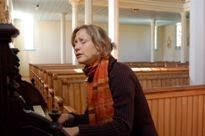
(Here I am, left, with Claire, centre, 
and Heather, on the verandah of the EB House.)

Saturday, March 2, 2019

Great Village Preservation Society receives heritage award

At a ceremony in Truro, N.S., on 28 February 2019, the St. James Church of Great Village Preservation Society received an award recognizing its contribution to the heritage of Colchester County. Presented by the Colchester Historical Society, the award recognized the work of the society in preserving the Elizabeth Bishop House in the village. The EBSNS wishes to congratulate the society for its good work with both the EB House and St. James Church, both buildings of tremendous importance to Elizabeth Bishop. Laurie Gunn, Treasurer of the Preservation Society and steward of the EB House, received this award on behalf of the society. She sent along the photos below, which we are happy to share.
(Laurie Gunn receives the award.
Presented by Terry White. Photo by Dan Gunn.)

(The parchment.)
(The citation.)

Friday, February 22, 2019

Letters to Aunt Grace, Part 101: In New York City

There was a substantial gap between Bishop’s 10 October 1961 letter and her next, dated “New York — December 12th 1961.” Bishop and Lota had left Brazil early in November, “We got here the 10th, I think it was,” she wrote to Grace, “I’m not sure of that now.” Then, in mid-thought she recalled, “no the 8th.” She knew she hadn’t “written to you in ever so long,” couldn’t remember if she’s written “after [Aunt] Mary left Rio.” Since that time, “so many things have been happening.”

They were in New York City so Bishop could work on the Time-Life book about Brazil, which was supposed to take about three weeks to complete, but “it’s four now and I am still working like mad and don’t see much hope for ending it ever.” Things with this fraught project were not going well. Bishop moaned, “I have never worked so hard in my life and never been so tired.” The work itself would have been the main fatigue factor, but being back in the US in winter would also have brought some culture shock and even disorientation, along with excitement.

Even with all the effort she was giving it, Bishop concluded, “the book about Brazil is still going to be awful!” She noted that “it has been an interesting experience — but never again,” at least not for the current outfit. Her long distance view from Brazil had not been overly confident, but upon meeting the editors, she declared, “they are incredible people and what they know about Brazil would fit on the head of a pin.” In spite of this ignorance, they still had “gall … arrogance … general condescension!” All characteristics Bishop could not abide. She did tell her aunt that she felt, even with all of this, “I’ve saved some of the book, and it does tell the truth, more or less.” She noted weakly that “some of the pictures are pretty — but not nearly enough.” She also reported that Grace would “be getting a copy — I’m not sure when — March, maybe.” Grace did receive her copy in due time. It is housed at Acadia University Archives in Wolfville, N.S.

After this frustrated update, Bishop turned to other matters, even though she had “scarcely seen or done anything.” She had managed to see “friends in the evenings a few times,” but she had to get “up at six to start work (they give me chapters to bring home every night!).” She reminded Grace, “Lota is with me,” and that they were “staying at a friend’s studio in Greenwich Village” (Loren MacIver’s apartment), not too far from “where my old garret used to be.” They had this comfortable accommodation because Loren and her husband Lloyd Frankenberg “are in Europe.”
(Bishop lived at 16 Charles St. in Greenwich Village
in the mid-1930s. This is her painting of 41 Charles St.,
not too far away. The McIver abode was in this neighbourhood.
From Exchanging Hats, p., 2-3.)
Bishop was typing Grace’s letter on Lloyd’s “typewriter — vintage 1920, I think.” This instrument was “a huge old Underwood I can’t see over at all.” In addition, there was “no lamp to type by.” This letter, on a piece of air mail stationary, is very faint in the photocopy I received from Vassar, quite unlike the regular letters Bishop typed in Brazil.
(The sort of typewriter of which she speaks.
We can't even imagine such a machine these
days when all we do is touch a screen and
presto, something appears.)
Bishop’s usual “—//” signalled a shift of subject. Bishop reported that the previous week she had gone to Worcester, “my only day off and not a very gay one, as you can imagine.” She flew there in the morning and returned in the evening, “(in a snow storm).” She went to see Aunt Florence, of course, but first connected with her cousins “Nancy and Kay [who] met me.” After the visit with Florence, Bishop had lunch with these cousins, plus another relative, “Priscilla Coe.” Grace would have known who all of these people were. Still more relatives were visited, “the Fultons to see his many children.” Not quite sure who this latter person is, but perhaps he had been married to one of Bishop’s paternal aunts. After all this reunion, Bishop told Grace that she “called on Aunt F again,” on her own. She reported that “the nursing home is NOT good — it has recently changed hands and gone down hill.” In spite of this deterioration, somehow Florence “has been much better — at least she seems much happier, doesn’t make scenes, etc., etc.” She noted that her aunt “is terribly frail and seemed sadly changed to me.” Surely this could not have been surprising to Bishop. How many years had it been since Bishop had seen Florence, perhaps decades?

Also not surprisingly, Florence “doesn’t remember much — just in spots — but I’m sure you know all about it,” meaning that Grace would understand such diminishment from her nursing of elderly patients. Bishop felt that her aunt had tried “hard for my sake, poor old thing.” She even “asked about ‘politics’ in Brazil.” Then she “asked my age and when I said 50 she said, ‘Oh no dear — you must be wrong — Auntie is only 48 so you can’t be 50’.”

Having had such a fraught relationship with this paternal aunt, one wonders why Bishop made the effort to see this frail elderly woman, with whom she had very little bond. Still, she made the effort, probably out of a sense of duty. Florence was the last Bishop, the last of her father’s generation.

Bishop dropped this sad subject and turned to other activities she had managed in the midst of her exhausting slog on the Brazil book. The next post will turn to those activities.


Thursday, February 21, 2019


CCCXXVI

 先生

Unwashed and naughty 
poet, teacher, and good man — 
Wystan Hugh Auden. 


 *     *     * 


 Today is W. H. Auden's one hundred twelfth birthday. 


 *     *     * 


 "In the prison of his days 
Teach the free man how to praise."


Friday, February 15, 2019

Letters to Aunt Grace, Part 100: Aunt Mary’s Visit, Part IV

Bishop’s letter of 10 October 1961 was starting to wind down. After the detailed account of her visits with Aunt Mary and her cousins, Bishop remembered that things were going on with Grace, too. There had been a wedding (just whose, I can’t quite figure out, but I think it might have been Bud & Lois Bowers’s wedding). Bishop limply observed, “Your wedding sounds fine (but I really don’t like weddings!).” Bishop had not been forgotten for this family ceremony, noting that she had “received the nice invitation a while ago.” She assured her aunt that “if ever I get  to N S I’ll bring them something from N.Y.” But even more than this gift, what Bishop really wanted was to bring her aunt something, “And what would you like from N Y?”

Grace had also, clearly, given Bishop more information about Miriam Sutherland in her most recent letter, which prompted Bishop to say, “I feel absolutely awful about that poor little Miriam.” Whatever Grace had reported, it made Bishop “hope she just dies quickly.” Well, that is an extreme hope and, fortunately, Miriam did not die “quickly” – but lived for decades bringing joy to her family. Bishop knew that it was “tough for Phyllis and Ern,” that it was “rotten luck” and that “Nature can be so cruel.” And while all these observations have some truth to them (it was a challenge to raise Miriam and keep her healthy), Miriam was an integral part of her family, something Bishop saw for herself when she finally did get to Nova Scotia in the early 1970s and met Miriam for the first time. Miriam always vividly remembered “cousin Elizabeth,” even from the relatively brief time they spent together. Indeed, Miriam Sutherland had one of the best memories of any person I have ever met (how many of us can say that!?)

The final paragraph of this long letter continued on with family matters. Grace was with “Phyllis and Ern” while they got things confirmed and sorted out with Miriam; her job was “watching over [the] small boys,” that is the Sutherland sons Wallace and David. It made Bishop worry and urge her aunt not to “work too hard.” Such care-giving would be “strenuous.” Bishop did know something about that sort of tending, from all the children who had spent time with her and Lota. But Grace’s idea for a break didn’t appeal to Bishop, either: “But I don’t think a winter with Aunt Mabel sounds like much fun, either!”
(Mabel Bulmer, left, and Grace Bulmer Bowers, right,
with Mabel’s dog, in Hollywood, Florida,
where Mabel often wintered with her daughter
Hazel Bulmer Snow, circa late 1950s. AUA.)
Bishop suggested an alternative: “How would you like to stay a week  or so in that nice old hotel in Halifax, and just be waited on? The one on the park?” The hotel in question is the Lord Nelson Hotel, east of the Public Gardens, which is still a going concern. Bishop noted, “I always liked it a lot.” Her suggestion was not just an idea but an offer: “I’ll treat you to a week there for a Christmas present if you’d really do it and not spend the money on your family!” (Bishop understood well enough Grace’s selflessness.) Such a week away meant, “breakfast in bed,” going “to the movies,” seeing “the sights.” But then Bishop wondered: “or would you get too bored?” What Bishop really wanted to do was take time off herself and go there with Grace, when she was in “N Y,” “but I’m afraid I won’t” have the time, she sighed, “I have to work every day for at least three weeks in N Y and maybe longer.” And then she noted what was no small issue, “and as you know N Y is expensive” — certainly compared to Brazil and Nova Scotia.
(Lord Nelson Hotel by W.R. MacAskill.
Not sure of the date, but this image shows
the tram lines that used to run on Spring Garden Road.
And to the east there are trees, rather than the wall
of buildings that now line this busy street. NSA.)
A “— //” signalled a shift in her train of thought, returning her to Miriam, a subject she clearly was sort of obsessed with, urging her aunt, once again (how many times?) to get “Dr. SPOCK — PLEASE buy a copy — read it — give it to Phyllis.” Part of her argument was that it wasn’t expensive, “only $1.00 — paper-back.” Since it “sells all over the place,” she was sure “they must have it in N S, too.” It was even “on the newstands in Brazil.” Bishop was certain Grace would “find it fascinating reading — (I do without a baby to my name) — and awfully good.”

This repeated urging had sort of spilled over to her cousin, who did have some babies to her name, but “Eliz[abeth Ross Naudin] won’t read it,” with Bishop avowing, however, that she had not “urged her.” Bishop also had to concede that Grace would “know a lot of it already, with all your vast experience with babies and small children.” Even so, Bishop felt that Dr. Spock “was so damned sensible.” She was sure that “a lot of what he says would help Phyllis and cheer her up a bit, too.”

Finally, she let go of this hobby horse, and with another “//” she turned to one of the other children, “I think it is wonderful Wallace [Phyllis’s oldest child] is going to take up bagpipes.” With her love of Robert Burns, perhaps it is no surprise that she declared, “I do like them!” Well, you either love bagpipes or you don’t.

The letter truly began to wind down, with the final closing wishes: “If you’re with Aunt Mabel, give her my love.” Bishop reiterated, yet again, that she “did write [to Mabel] — but it must have got lost.” And promised she would again “when I get through this book,” though “heaven knows when that will be!”

“As always,” Bishop sent “much love to you,” and made one last pitch, “think of my idea!”

Bishop’s next letter was written over two months later from New York. The next post will take up this final epistle of 1961.


Wednesday, February 13, 2019

Great Village School photo

(Click this image to enlarge. Courtesy of Michael Colbourne.)


While I’ve been writing about Mary Bulmer Ross’s visit to Brazil in 1961, the photo below of the students and teachers of the Great Village school, 1914–1915 (which building was brand new at that time) came to me from EBSNS member Michael Colbourne. He is the grandson of Maynard Brown Archibald who is seen in this image in the back row, far left. Archibald who taught at the school for a year before he enlisted to fight in World War I. He was not much older than some of the oldest students he taught. Archibald is the father of well-known Nova Scotia writer Budge Wilson. Many years ago, Budge sent me a print of this charming image. While I am very careful with all my Bishop documents and materials, somehow over the years, I lost track of this print. So, I was delighted when Michael sent me a digital version. He has given me permission to share it. Part of the reason I want to share it is that Mary Bulmer is included. She is sitting on the steps, second row (behind the three boys), on the right, in a dark dress. She is holding hands with Una Layton, a very close family friend to all the Bulmer daughters, who sits directly behind Mary, in a white dress. I would love to know who some of the others are in this image. If anyone from Great Village sees this picture and can tell me, that would be greatly appreciated. Archibald became a lawyer and then a federal judge.

Sunday, February 10, 2019

From Our Key West Correspondent


Key West Celebrates Elizabeth Bishop’s
108th Birthday on February 8, 2019

Members of the Key West Poetry Guild and others celebrated Elizabeth’s 108th birthday in style. Sixteen Key West poets read selected poems by or honoring Elizabeth Bishop to a rapt audience of 50 to 60 people. Malcolm Willison gave a short history of Elizabeth Bishop’s life and introduced each poet.

Elizabeth Bishop lived in Key West on and off for ten years. She captured the unique atmosphere of Key West in such poems as “The Bight,” “The Fish” and “Roosters.”

During the intermission all attending had helpings from the huge and delicious birthday cake.

Kay Bierwiler
(click to enlarge)

(The birthday cake!)
Alas, I cannot identify these folks, but it looks like a lovely time. Thanks, Kay, for sharing these images and letting us know how things went. I am sure Key West was much warmer than Nova Scotia on the 8th!!

Saturday, February 9, 2019

EB appears is the strangest places

I took my elderly father out for coffee yesterday afternoon to a local eatery called The Big Scoop. Every Friday they have a stack of a little local newspaper called The Reader, which covers the area from Annapolis Royal to Middleton. Imagine my surprise when I saw a thumb nail photo of EB on the front page and then read the "On this Date" -- acknowledging that 8 February is special because it is her birthday. Here are the pages in question. Today is my elderly father's birthday. He is 88. Happy birthday dad. And all others whose birthday is in the deep mid-winter.

Friday, February 8, 2019

Letters to Aunt Grace, Part 99: Aunt Mary’s Visit, Part III -- and Happy Birthday Elizabeth

If EB were living today, she would be 108. HAPPY BIRTHDAY Elizabeth. Folks in Key West are having a birthday celebration in her honour today. Our Key West correspondent has promised an account of the festivities, so stay tuned! For now, the next installment of Letters to Aunt Grace.

**********
The next couple of paragraphs of Bishop’s 10 October 1961 letter shifts focus to the arrival of “the other Mary,” that is, their friend Mary Morse and her adopted daughter Monica. They had been in the US for several months and their return coincided with the visit by Aunt Mary and cousins John and Joanne. After sending them back with the Naudins, after a successful family visit, Bishop reported to Grace that “Lota and I got up as 4 [a.m.] Sunday.” This early rise was because they too had to get to Rio in time to meet Mary Morse’s “7 A M” flight, “Same flight as AUNT M [the week before] — the jets” from the US all arrived at the same time.

This run to Rio included “our cook and ‘butler’ …. Maria & Alberto.” They “had never seen the ocean, never seen a city — never seen an airplane except away up in the air.” Bishop reported what was to be expected, “you can imagine the excitement — hysteria almost.”

As it turned out, “we had to wait over an hour at the airport” (some things are timeless and universal). Not surprisingly, “Maria had to go to the bathroom.” This was when the trouble started: “poor Alberto, innocent lamb, went in with her.” Bishop reported that “before we could get there a policeman was shouting at him ‘Lack of respect! Indecency!’ etc etc.” Even as they explained that Alberto “couldn’t read” signs such as “Ladies & Gents,” it made no difference. Bishop’s conclusion, “they are such stupid brutes, policemen — the world over, I suppose.”

After that upset, Mary Morse arrived and they all returned to the “tiny apartment” in Rio, prompting Bishop to report, “It has been rather hectic [with] Lota, me, Mary (the friend Mary, that is — all these Marys and Elizabeths are confusing) Monica,” and “the couple.” Bishop noted that Monica “is walking now, like a drunken sailor.” And Maria and Alberto “are so excited by everything,” clearly putting the run in with the law behind them. Bishop confessed, “we send them out to see the sights, just to get them out of the way.” Their excursions were a mixed blessing, Bishop noting that they “then get scared for fear they’ll get lost, run over, etc.” Alberto appears to have been more adventurous because he “bought himself a pair of bright yellow bathing trunks and has just taken his first ocean swim.” Maria preferred to watch this “from our terrace — sure he’s gong to drown, in waves up to his knees.” Bishop perhaps would have enjoyed their discoveries more if things had been a bit less chaotic.

After this digression, she returned to family reports, noting that Elizabeth Naudin’s little daughters, “Suzanne & Diane behaved very well Saturday.” She noted that Diane was “a little better than Suzanne,” and judged that Diane’s “disposition” was “sweet … anyway.” She confirmed that their parents “are very good with them” (being so keen about child-rearing, Bishop had much to say about parenting!).

She felt the Naudins and the Rosses, one and all, didn’t “care much for our house! (Although they’re all very polite about it!)” Bishop concluded this dislike was because “it’s too modern for them, I’m afraid.” Lota’s architecturally prize-winning house was, Bishop thought, “not much like a cozy house in Montreal!” Bishop presumed that for them  “it probably seems like a barn … big and bare.” But her defense of it was the climate: “one wants space, cool floors, and no upholstery.”
(John Ross, jr. and Mary Bulmer Ross at her home
in Montreal, circa late 1960s. AUA.)
Even so, John Ross Jr. “said he’d like to come to live in Brazil.” So some aspects of the place appealed. And Bishop reiterated that she “showed Mary absolutely everything in the house … except the china-closet.” She hoped that Mary would be able to return at least once more before she departed, so that her niece could “fill in everything she missed!” Mary was clearly curious about “everything.” And it appeared to Bishop that they were all “have a pretty good time, and Ray is taking time off and they’re going up to Teresopolis,” where his family lived. This place was “higher in the mountains.”

Even if Mary could not return to Petrópolis, Bishop said she would “see her whenever I can get a chance,” and she was planning “to take them to lunch at one of the nice outdoors [sic] place I like.” Whatever else was possible had to be fit in between work, “I just wish I weren’t so DAMNED busy on this book.” Having visitors did not stop the “political events — that keep right on happening.” One consequence of the volatile political situation was it meant Bishop had “to re-write” parts of the book “two times, at least.” You can hear the sigh when she wrote, “I feel as if I were going made.” And wound down this dense paragraph with, “at least we did have a couple of days.”

This long letter was starting to wind down. The next post will conclude with another call from Bishop for Grace and Phyllis to read Dr. Spock!

Tuesday, February 5, 2019

Elizabeth Bishop House Residency accepting applications

The Elizabeth Bishop House hosts an artist residency for two weeks each September. The application process is now open. The deadline is 15 April. Below are the particulars if you want to submit an application. The inaugural artist in residence was Canadian poet Claudia Radmore. September is a lovely time to be in NS! Good luck. You can click the image to make it larger.

Saturday, February 2, 2019

Letters to Aunt Grace, Part 98: Aunt Mary’s Visit, Part II

I left off Bishop’s account of Aunt Mary’s visit, in her letter of 10 October, at the point where she and Lota drove Mary to Samambaia in their “tiny car.” Bishop then described the scene they saw when they arrived. Because of the “terrible drought here — not a drop of rain in four months,” the landscape was feeling the affects. One consequence of this aridity was “bush-fires,” so “all around the house … everything is black.” To Bishop, “it looked like HELL!” But she was used to the lush green and vibrant colours. Mary, other hand, “seemed to like the scenery all right, anyway.”

Mary also liked the cats, who were starved for attention. Bishop’s own “Tobias took a great fancy to her, and ate breakfast in bed with her,” though Bishop observed in what was likely a wry tone that Tobias couldn’t “compare to Pouchie!” Mary’s own cat.

Having arrived in the mountains, Bishop reported that both Mary and Lota (who was working hard on the park) “took long naps (I think she [Mary] was really awfully tired,” not surprising after the long trip and the intensity of the reunion. After this refresher, Bishop noted that they then “stayed up till after mid-night gossiping.” I would have liked to have been a fly on the wall for that conversation. A lot of catching up to do.

“The next day we took her to Petrópolis and back.” I remember the grandeur of some of the buildings in this mountain city, where the Portuguese emperors lived and ruled their empire for a long time. Mary would have been impressed by the palace, cathedral, opera house and massive museum, among many other imperial buildings.
(Palácio Rio Negro, the President's summer home.
One of the many ornate buildings in the city.)
After this outing, “then all the rest of the cousins arrived for lunch.” Before the meal, they went for “a swim in a friend’s pool.” The drought had made the water level in their brook “so low that for the first time in all these years our little swimming-hole is too low to swim in.” Afterwards they all sat down to “a big Brazilian style lunch.”

This visit would have been really important to Bishop and she reported to Grace, “I think it was all pretty successful.” She found her youngest aunt to be “a good guest — she is interested in absolutely everything and remembers the names of the flowers and trees, etc.” They had had plenty of guests who “pay no attention at all to anything in the country,” but, after all, Mary was a born country girl, even if she’d transplanted to the big city of Montreal after her marriage. As pleased as Bishop was to have this engagement from her aunt, she added a brief addendum at this point, signalled by an asterisk: *But I wished it had been my favorite aunt,” meaning, of course, Grace.

That said, Bishop still “wanted to keep her over to go back with us Sunday P M or Monday morning,” when they usually made their way back to Rio. The obstacle to that plan was “a cable saying that our friend Mary [Morse] (with the adopted baby Monica)” would arrive Sunday morning. This anticipated return was one of the reasons Bishop “wanted everyone that Saturday,” or there would have been “just too many people to handle!”

As a result, “Mary (our Mary) went back” with the Naudins Saturday afternoon. Though “a short visit,” Bishop concluded that it was “very nice.”

You can sense not only the relief in her report but also her pleasure that she could host her relatives so graciously, offer them a memorable visit, even if the drought had turned the landscape into a kind of wasteland.

The next part of the letter veers away for awhile from familial matters and towards their own concerns. The next post will take up these other concerns.

Friday, January 25, 2019

Letters to Aunt Grace, Part 97: Aunt Mary’s visit, Part I

Bishop’s next letter to Aunt Grace is dated “Rio, October 10th — 7 A.M.,” a month after her previous letter. This epistle is twice as long as the previous one because it reports the greatly awaited arrival and visit of Mary Bulmer Ross and her daughter Joanne and son John (siblings to Elizabeth Naudin). Bishop packed in as much of an update about this family company as she could, on the two pages she allowed herself. The next several posts will present this update, a bit at a time.

Her first order of business was to explain the early time of day: “I get up at 5 & 6 these days to get to work early.” Being in Rio and with Lota deep into the park work, the phone “starts ringing for Lota! (around 8).” The apartment in Rio was much smaller than their big house in Samambaia, and there was no estudio, so Bishop had a harder time concentrating with all the hubbub.

She then acknowledged Grace’s letter of 27 September, which she had received “yesterday,” though “it really came about a week ago.” It was sent to Samambaia so had to be sent to town by Alberto, “our darling ‘butler’,” who put it and other mail on a bus, but “got everything wrong (he can barely read).” As a result, “nine letters were lost in the Rio bus-station for about a week.” They had finally turned up and delivered to their recipients.

Then Bishop confirmed what Grace had likely surmised, that “all kinds of things” had happened and she “thought you’d like to hear about” them, even though “Mary is writing you, or may even have written by now.” That is, Aunt Mary.
(Elizabeth Ross Naudin, Mary Bulmer Ross
and Suzanne Naudin, late 1950s. AUA.)
Bishop reported that “they arrived the 30th [of September], a week ago Sat.” Bishop had gone “to dinner at Eliz’s that night to see everybody.” She noted that “of course they were all pretty exhausted,” including the Naudins who “had stayed up until 4 the night before — and gone to the airport about 6!” Anyone who has travelled such a great distance or who has received travellers from afar can see in this brief report that things have not changed with air travel — the sleepless anticipation and the sleepless en route. Undoubtedly, Mary and her children would have never yet ventured so far in their lives. Perhaps the furthest south Mary had ever been was Cuba, where she nursed at the Stranger’s Hospital for a year or so, and where she met her husband John Ross.

The day they arrived, Bishop “went that AM and baby-sat [at the Naudins] a bit while they were out, just to see if everything was all right.” The Naudins had a maid but Bishop reported unkindly that she was “rather dumb … poor thing,” so she wanted to make sure the children were okay. She “left around 8:30 — then went back for the dinner-party.”
 (Elizabeth Ross Naudin, John Ross jr., Joanne Naudin.
Early 1950s. AUA.)
Bishop then assessed the visitors. She would not have seen Aunt Mary for many years. She observed, that her aunt (only eleven years older than Bishop) looked “rather old, to me, as I undoubtedly look rather old to her, too!” Even so, Mary was as “good-looking” as ever. Perhaps Bishop had never seen Joanne Ross, whom Bishop thought was also good-looking, but “too bad she didn’t get the pretty nose the others have.” She concluded with, “I think I like John [the son, not the father, who had died in 1959] the best of all” because “he’s so quiet and has such a nice smile and — I think the best sense of humor in that family.” John was also a handsome young man, and clearly charming.
(John Ross jr. He is standing in front of a George W. Hutchinson
painting in Mary Bulmer Ross's home in Montreal. Another version
of this painting was found in Parrsboro in the early 2000s, but the
location of this second painting is now unknown. AUA.)
After this initial reunion, Bishop noted that she “was too busy all week to see anyone — scarcely went out of the apt. except to get a broken tooth fixed.” But the Friday morning of that week “we picked up Mary and drove her up to Petrópolis — in our tiny car, loaded with bags and food.”

The next post will continue the account of Aunt Mary’s visit.


Sunday, January 20, 2019

Letters to Aunt Grace, Part 96: Expenses

The final two short paragraphs of Bishop’s letter of 10 September 1961 contain an assortment of subjects. Grace had told Bishop of another important family development, which prompted Bishop to say: “You are going to be very elegant for the wedding.” I am not sure who was getting married, but likely it was either Wallace (Bud) Bowers or Rod Bowers, Phyllis’s brothers. It would be about the time for such events to happen. Phyllis had been married for some time, but the boys took longer to settle down. I knew Bud and his wife Lois for many years, but never thought to ask when they were married. Being “elegant” indicates this union was an important one for Grace. Mother of the groom would do it.
(l. to r.: Wallace (Bud) Bowers, Lois Bowers, Phyllis Sutherland.
Standing: Maria Lucia Martins. Early 2000s. Photo by Sandra Barry.)
Bishop’s interest in Grace’s attire is not surprising, as she was particular about her own clothing. She dressed simply, but she usually had clothes tailor made. She told her aunt that the trip to New York City meant she “had to have clothes made…” She found this requirement “annoying, because when I get back here it will be HOT and I won’t be able to use them.” New York in October and November would be anything but hot. That said, she indulged because “they’re cheaper here, a lot.” This expense made her think of another expense that was greater in the U.S.: “I just pray I never get sick in the USA — I have no Blue Cross or anything like that.” Having to go to “a hospital makes my blood run cold — the expense.” This train of thought brought her back to her aunt’s recent health ordeal, and she remarked how glad she was that “you got through it so reasonably.”

Then a quick question, prompted by another of Grace’s comments: “Where does the $10 a day come from?” Not a lot of money today, but in 1961, probably a nice monthly stipend to receive. Just what its source was is hard to say. A pension?

Bishop was finally winding down for good with this rather brief letter, reiterating that it was written mostly “just to say I feel cheered up about the baby [Miriam Sutherland].” Even so, she knew it was a trial for the parents: “poor Phyllis and Ern.” And she hoped “the little boys [Wallace and David] aren’t too strenuous for you.” Which indicates that Grace was with the Sutherlands, helping out while the parents clarified matters with their little daughter. Wallace and David loved their little sister and were devoted to her all their lives. They were both still quite young in 1961, so Phyllis and Ern had their hands full. Bishop understood this situation and urged her aunt to “Please take it as easy as you can.”

As the letter came to its close, Bishop alerted her aunt to the fact that she would not be able to write “for some time since I am away behind with this damnable book [the Time-Life Brazil book].” She asked Grace to “let me know where you’ll be,” and closed “With lots of love.”
In the margin of this letter, which fit on one page, Bishop typed a p.s. to clarify the postmark on the envelope which was “Copacabana Palace.” She told her aunt that they “mailed letters up the street at the hotel now, in Rio — they have a stamping machine & it’s safer.”

The envelope clearly shows this impressive stamp and also shows that Bishop sent this letter to Great Village, even though she realized Grace was helping Phyllis, who at that time lived in New Glasgow, N.S. Someone in Great Village (at the Bowers farm) dutifully re-directed the letter to its proper coordinates in that town: “486 Chisholm St.

Bishop’s next letter was written exactly a month later, and will be taken up in the next post.


Saturday, January 19, 2019

Elizabeth Bishop birthday party in Key West

The poster below arrived via our Facebook page the other day. Nice to see that somewhere someone will celebrate Bishop's 108th birthday in February. Wish I could "Come Flying" and join the festivities in Key West. I am sure a lively time will be had by all. We hope that the folks there will let us know how things go and send us a photo or two!

Tuesday, January 15, 2019

A Poem + A Recommendation


Jijigwatejg

Small and circumscribed.
So my world has now become.
Middle class cairn. Crumb.


[The title is Mi'kmaq for 'Sandpipers.' The third line is an anagram of the first, which is taken from the conclusion of the inimitable Tootight Lautrec's "Welcome to my Opening" video, devoted to Margaret Atwood's novel The Handmaid's Tale. I will confess to being not very fond of Margaret Atwood's work, but hearing Lautrec-sensei's sensitive reading of the first chapter just may make me reconsider. Do yourself a favour and give it a listen/look -- https://www.youtube.com/watch?v=viwcs0NHj50 ]

Saturday, January 12, 2019

Letters to Aunt Grace, Part 95: The reassurance continues

Bishop’s next letter to Grace was written less than a week after her last (26 August/4 September), at least it looks that way, for Bishop herself wasn’t sure of the date, which she typed “Monday morning — Sept 10th? — Rio.” This missive was prompted by “getting all your letters,” so clearly Grace had been writing. Bishop still felt that she was “way ahead of you,” since she’d just sent off the previous one, written so recently; but “all” these letters certainly required a response, which Bishop did, even as she was still in Rio.

She wanted to write quickly to say how “very relieved” she was “to hear you sounding so well — cheerful, at any rate!” Bishop had been so worried about Grace because of the health issues, the cancer scare.

She explained the location of the letter: “We came down from the country last night.” En route they had “stopped at the Petropolis P O where I found yours of the 2nd [of September].” Even though she had written at some length about the political situation in Brazil in the previous letter, she added again, “As you know — all kinds of awful things have been happening here, but things are settling down new,” unfortunately “in a way we don’t like at all.” Bishop’s response to all this unrest and change was: “Poor Brazil — she’s in for a hard time, I’m afraid.” Much of the trouble was with “that president!” (see Post 93). All their “hopes in him” were dashed because “he just went crazy (already was) and ran away…” Bishop observed that “it is a strange world where a poor man can get sent to jail for stealing oranges and the president can run away and throw the whole country into chaos — almost civil war — and nothing will happen to him at all.” She speculated that “he’ll probably come back and run for office again!” One has to pause here and wonder what has changed in the world? Presidents are still “crazy” and throwing their countries into chaos. Plus ça change, plus c’est la même chose.

Bishop reported that she had seen the Naudins “last week,” and noted that “poor Ray annoyed me again!” She couldn’t abide “his attitude … that none of it [Brazil’s trouble] has anything to do with him.” That it was “business as usual.” Bishop assured her aunt that she did not “attempt to argue with him or anything,” because “it’s hopeless.”
 (Grace Bulmer Bowers, circa 1963.
Grace scribbled on the back of this image:
"keep in attic." AUA Doesn't she have
the most reassuring face you've ever seen!).
The next paragraph returned to a subject that had occupied a good part of Bishop’s previous letter: Miriam Sutherland. Grace’s letter clearly brought further news about just what was going on with this new member of the Sutherland family. Bishop’s primary motive for responding so quickly to her aunt’s letter was to write about this news: “what you say about the baby sounds awfully good to me. SURELY she must be really all right.” Grace had reported that she was “looking at people, smiling, and looking at her hands, etc. — all according to schedule,” all good signs for an infant. Bishop confidently asserted, using a term that is long out of favour in this matter, “I am positive if she had any mogoloid tendencies at all she wouldn’t do that.” All of Bishop’s assertions to Grace were, she said, because she had “been reading up in the baby books we have here,” so she clearly regarded herself as informed. She was sure that if it was serious with Miriam, “she’d be awfully slow — and wouldn’t see people, develop normally like that, etc.” She speculated that “the doctor was just being awfully awfully cautious — thought he might discern some of the characteristics,” so he was diagnosing “on the safe side in case her parents had to face something awful about her.” Bishop wondered if the issue might be her “esophagus? — have they x-rayed her, I wonder?”

By way of further reassurance, Bishop reported that the Naudins “little Diane was very slow, apparently — but bright enough, all right.” And then there was Mary Morse’s “adopted daughter Monica” who “has slanting eyes, too (I suspect a little Indian blood) — and short fingers,” but she too was “certainly bright enough.”

Bishop wanted all her speculation and queries to be for Grace only, “For heaven’s sake — don’t show my letters to Phyllis.” Bishop meant well and her thoughts were only because she cared and the situation “just seemed so sad I couldn’t bear it.” But whatever Grace had written returned reassureance to her niece: “what you say doesn’t sound a bit like what the books say about the symptons.”

This brief and hurried letter then went into its wind-down, which will comprise the next post.

Wednesday, January 9, 2019

A Year-Old Poem


Pound and Pence: a Visitation


Here in the bughouse
irrelevant narcissism
mars biographies.

Bishop's miss the Marsh
bearding iris in their fen,
crisp and shivering,

while brave Daniel Swift
to draw upon his own life
experiences

along with us all
he assumes the excitement
we feel -- we all feel --

when our emotions
too far exceed their causes.
Lions in Winter

they're not and we're not,
but surely we don't deserve
Michael Wolff's clothing

sheep as they look up
in so much fire and fury?
What could we have done?

The Vice-President 
dozes in his velvet chair.
What is to be done?

                                      9 January 2018

Sunday, January 6, 2019

Letters to Aunt Grace, Part 94: More reassurance

Bishop’s long letter of 26 August 1961 closed in a rather ad hoc, scattered way. She acknowledged the rather messy typescript of this letter by declaring that her “little old typewriter skips badly.” A “//” offered a gap before an odd comment, that was clearly a response to something Grace had written: “That must have been quite an adventure at sea for Uncle G.” Which George she meant is unclear. Great Uncle George Hutchinson (long dead) was a globetrotter and travelled often by sea. Uncle George Shepherdson (still living but elderly) rarely if ever, as far as I know, ventured onto the water. Here is another moment when we must regret the loss of Grace’s letters to her niece and wonder what on earth happened to them, knowing with fair certainty that they were likely lost or even destroyed (not by Bishop) at some point.

The next subject was feline in nature: “Is that cat Punchie or Paunchie?” The cat in question belonged to Aunt Mary Bulmer Ross because Bishop immediately acknowledged: “I  know how Mary feels about him.” This empathy concerned the cat’s loneliness and how sorry Mary was about it. Bishop noted that “our three [cats] get so lonely without us.” They were back from Rio for the weekend and she told her aunt that she had all of them “on my bed” at breakfast, “all purrring [sic] like mad — so happy to have someone in the house.” So lonely were they for Bishop and Lota that “they go in the bathroom and almost beg to be brushed.” Bishop clarified with a scribbled, parenthetical: “(I keep their brush there).”
 (Lota (l.) and Elizabeth (r.) in the living room at Samambaia.)
She was really getting to the end of her letter and hoping that after having “given you two long lectures, on child care and international relationships” that Grace wasn’t “bored stiff.” And acknowledged that she really had to “get to work.” A final housekeeping question: “Did you get the check all right?” She thought “probably” her aunt did, but she still worried because “sometimes they do get stolen.” Grace had clearly not confirmed receipt as Bishop noted, “probably you just forgot.”

The next bit of housekeeping was about the pending trip to the U.S. She confirmed her intention to “stay over [in Brazil] into October just long enough to see Mary and then we’ll try to get to NY.” Bishop wanted her youngest aunt (Mary, you will remember was planning to visit the Naudins) “to come up here,” that is Samambaia, and hoped that “it rains before then” because “everything is horribly dry and brown.”

And that was it for this epistle, concluding “With much love” and the admonition for her aunt “to take care of yourself.”

But in the end this closing wasn’t all for this rambling letter. There is a lengthy post-script dated 4 September. Bishop apologized for the delay: “I’m sorry — I thought this got mailed to you the other day but apparently it got left out.”

So, she took the opportunity to add a few more lines. She wanted to reassure her aunt, “in spite of what you may be seeing in the papers,” that “everything is pretty quiet in Rio.” She noted that there was “just one spot in town” where there was “trouble, and we avoid that.” She reported that the “vice-president is coming back today — probably,” but observed “we hate him, and dread what he’ll do.” However, in spite of all this, “apparently civil war has been avoided at least.”

She added more reassurance that they were “fine and everything goes on as usual for me.” Lota, on the other hand, “goes to the governor’s palace to be with her pal the Governor a lot.” As a result, “we keep well-informed.”

She added that “Saturday morning I went to see Elizabeth [Naudin]” and learned that “Ray had to go away with his father that afternoon and for the night but she had someone to stay with her and they seemed to be taking everything very calmly.” Ray might be calm, but he was “complaining about Brazil as usual ..!”

She also noted that her youngest aunt would be “arriving on the 30th [of September], I think,” and wondered if Grace was “going to Montreal” before that. She herself would “try to get to N Y about October 15th.”

She again assured Grace that “Elizabeth is very calm.” She even generously gave Bishop “some sugar!” A real gift because “we hadn’t a grain in the house.” Because of the political unrest, “there had been a rush to hoard things — probably unnecessary, the way things look today.” Again, she urged Grace: “Don’t worry — everything is fine.” And reiterated, “Let me hear from you,” saying that they would be back at Samambaia “next week-end I hope.” And this time, the letter finally concluded for good, “With much love.”

Bishop next letter was written less than week after, on 10 September, in response to one from Grace. The next post will pick up the narrative.


Wednesday, January 2, 2019

A few openings remain at the EB House for 2019

Happy New Year one and all. This post is to let you know that there are still a few slots open for 2019 at the EB House Artist Retreat. The first year of its resurrection (2018) was a great success and thanks to the hard work of steward Laurie Gunn and the support of the Great Village Preservation Society, this year will be even better. Below are the terms for staying at the house and a list of all the weeks available and taken (highlighted) -- there are still lots of slots during prime summer and fall, but they will go quickly, so get in touch with Laurie as soon as possible. Also, a reminder that the EBSNS AGM and 25th anniversary celebration will take place in Great Village on Saturday, 22 June 2019. We'll be posting information about our exciting program for the day as spring approaches. Wishing one and all a healthy and prosperous year.